
National Cadet Corps
What is NCC?
The National Cadet Corps (NCC) is the youth wing of the Indian Armed Forces, headquartered in New Delhi, India. The NCC was established with the aim of grooming young men and women, nurturing their potential, and directing their energy towards nation-building by instilling in them a sense of discipline, responsibility, and commitment to the nation. Today, the NCC has an enrolled strength of more than 1.3 million cadets across the country. The motto of the NCC is “Unity and Discipline”.
Aim of NCC
- To develop qualities of character, comradeship, discipline, leadership, secular outlook, spirit of adventure and ideals of selfless service among the youth of the country.
- To create a human resource of organised, trained and motivated youth, to provide leadership in all walks of life who will serve the nation regardless of which career they choose.
- To provide an environment conducive to motivating young Indians to choose the Armed Forces as a career.
Objectives of NCC
The objectives of the NCC are: -
- Train volunteer youth to become confident, committed and competent leaders in all walks of life.
- Enhance awareness levels of cadets to become responsible citizens of the country.
- Provide opportunities and encourage cadets to enrich their knowledge, develop communication skills and build character.
- Conduct social activities and community development programmes, to make constructive contributions toward society.
- Undertake adventure activities to hone leadership qualities and risk-taking abilities.
- Provide a platform to launch “Goodwill Ambassadors” to project the image of the country overseas.
- Conduct military training to develop awareness about Armed Forces, leadership skills and military values thus, provide an environment to motivate cadets to join the Armed Forces.
NCC at IIIT Vadodara
With a view to sensitising students to the needs of nation-building, social awareness, and social upliftment, the NCC Unit was established at IIIT Vadodara in the academic session 2025–26, with a sanctioned strength of 80 cadets. The Unit is affiliated with the 2nd Gujarat Independent Company NCC Battalion and comprises both male and female cadets.
The NCC Unit at IIIT Vadodara is dynamic and committed to providing students with opportunities to participate in a wide range of activities that foster discipline, leadership, teamwork, physical fitness, and a sense of responsibility towards the nation and society.
Students enrolled in the NCC Unit receive training in rifle shooting, handling of ammunition, basic first aid, mountaineering, and trekking through challenging terrains, along with regular participation in drills and parades. The Unit also provides cadets with opportunities to participate in camps and various social and community-oriented activities.
Training Period
The total training period for Senior Division (SD) and Senior Wing (SW) cadets is three years. Each cadet is required to undergo service training for at least three hours per week during the training year.
Every cadet is required to complete a minimum of 75% of the prescribed training hours during the academic year. Cadets who have completed one full year of training and are entering their second year are required to attend an Annual Training Camp (ATC) of approximately 9–10 days as part of the eligibility requirements for the NCC certificate examination.
List of NCC Camps:
Throughout the year, various camps are organised to train cadets in different fields.
Scholarships and Awards
NCC cadets have an opportunity to get scholarships from various schemes.
Career Options
- SSC in Army (NCC Special Entry Scheme)
- Coast Guard
- Air Force (Airman)
- Border Security Force
- Central Reserve Police Force
- Central Industrial Security Force
- Benefit in state exams (Bonus marks)
Message from Associate NCC Officer
Dear Students,
I hope you are aware that it is required to complete one of the prescribed options, NCC/NSS/NSO/NCA, to fulfil the degree requirements. You therefore have a choice, and most of you must be in a dilemma: “Which option should I choose to complete this requirement?” Instead, I suggest you should ask yourself, “Which option can add something meaningful to my personality, confidence and professional life?”
The NCC is not just another course that you complete to fulfil a degree requirement. NCC allows you to inculcate discipline, leadership, teamwork, responsibility, organisation, communication, and decision-making in yourself through practical experience. Most importantly, NCC gives you an environment where you don't simply study leadership- you practise it. Apart from personal development, the NCC “C” Certificate can also provide additional advantages in certain career pathways and competitive examinations, including opportunities related to SSB selection, bonus marks in certain examinations, and an additional credential on your resume.
Think about the person you want to become. Your engineering degree will demonstrate your technical knowledge. But when you enter the professional world, organisations will also look for other abilities, such as:
- Can you take responsibility?
- Can you lead a team?
- Can you communicate effectively?
- Can you remain disciplined under pressure?
- Can you organise an activity?
- Can you work with others?
NCC provides a structured environment to develop officer-like qualities (OLQs) that can be helpful in all walks of life. Whether you eventually become an engineer, entrepreneur, researcher, manager, civil servant or professional in any other field, these qualities will remain useful throughout your career. Don't choose NCC just because it is another option. Choose it if you want to challenge yourself, develop yourself and experience something different from the regular classroom environment.
I look forward to seeing enthusiastic students at the NCC parade ground.
Jai Hind
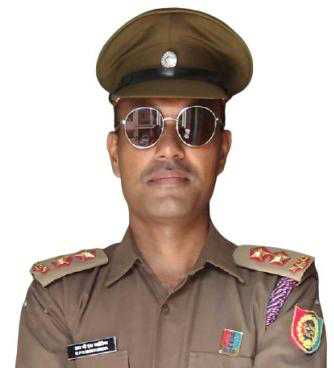
Associate NCC Officer
IIIT Vadodara
Contact: ncc@iiitvadodara.ac.in
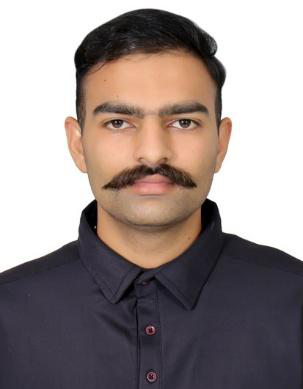
NCC Drill Instructor
IIIT Vadodara
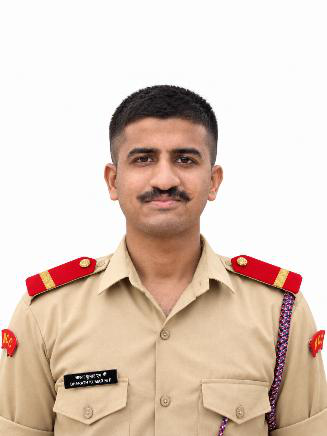
(Reg. No.: GJ2025SDIA162072)
Junior Under Officer
IIIT Vadodara